Aquaculture is the fastest growing food system in the world, and alongside this rapid expansion, demand for aquatic foods continues to increase. Aquatic food consumption has grown at nearly double the rate of human population growth for the last several decades, supplying key micronutrients to communities across the globe. Yet, this growth has outpaced the regulatory and political frameworks required to balance production aims with environmental, nutritional, and economic objectives.
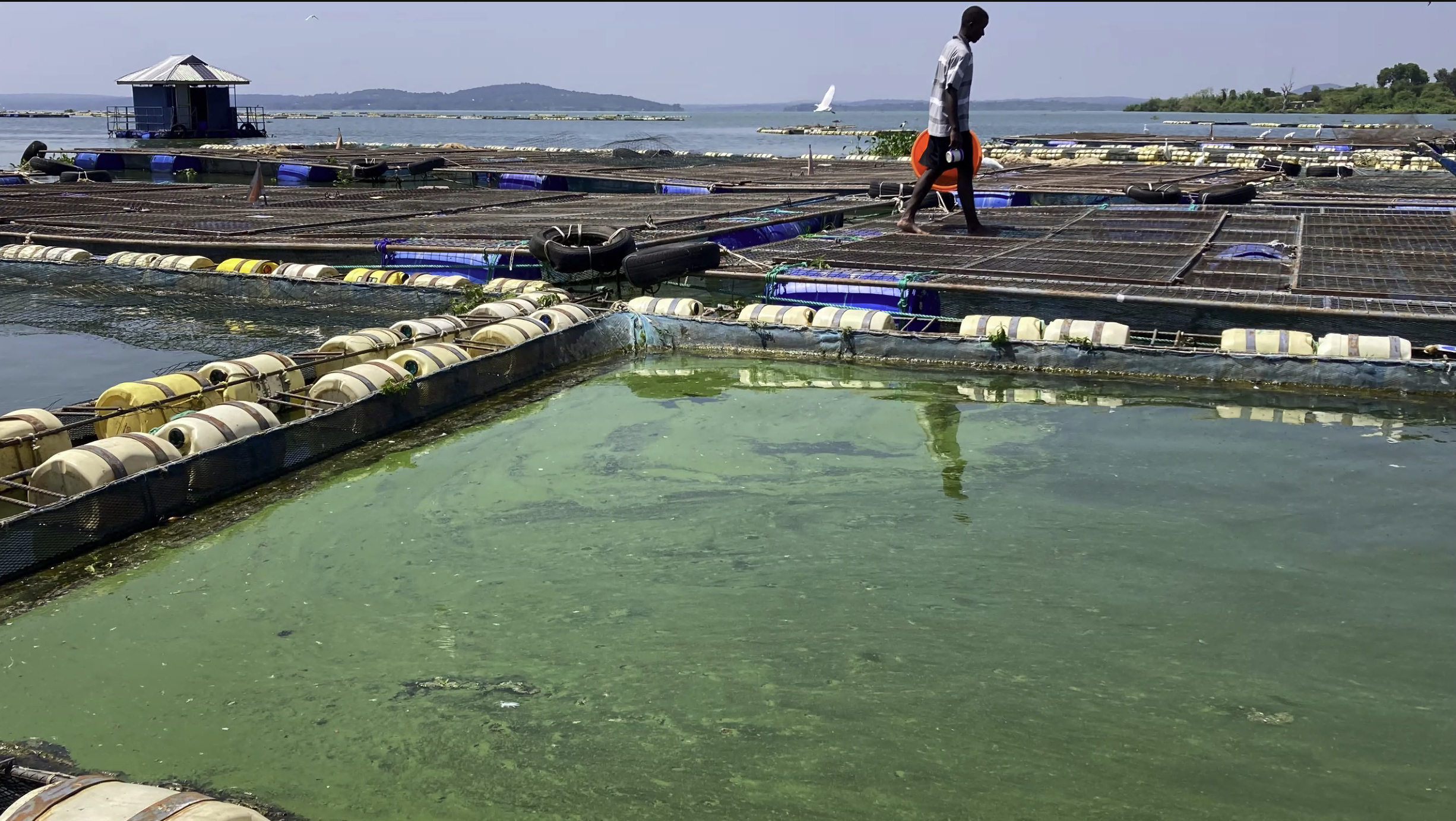
The Lake Victoria system is illustrative of these challenges, as a nascent cage aquaculture industry undergoes explosive growth to meet increasing demand for fish in the context of declining wild fish catch and persistent harmful algal blooms. Cyanobacterial-producing harmful algal blooms are widespread and frequent in Lake Victoria and involve cyanobacterial production of a potent liver toxin known as microcystin that accumulates in fish.
With a One Health approach, our work in Lake Victoria aims to:
(1) improve uptake of biosecurity and best management practices by delivering targeted extension services to cage farmers
(2) determine the identity and prevalence of tilapia pathogens via active disease surveillance and rapid-response fish health investigations
(3) characterize antimicrobial resistance patterns of bacterial pathogens
(4) enhance regional capacity in fish health diagnostics
(5) characterize the fatty acid and micronutrient profiles of farmed and wild tilapia

Our project provides scientific data to support evidence-based policy in Lake Victoria, including: (1) identifying gaps in knowledge to guide extension services; (2) determining the most prevalent infectious diseases to tailor mitigation strategies; (3) enhancing diagnostic capacity for the Kenyan government to respond to health challenges; (4) characterizing the nutritional profile of farmed and wild tilapia to steer nutritional programs.
Example papers and projects:
- Teplitz, E. M. et al. Disease and Antimicrobial Resistance Surveillance for Nile Tilapia Pathogens in Lake Victoria, Kenya. Journal of Fish Diseases (2025) DOI:10.1111/jfd.70022.
- Atkinson Venture Fund Award: Balancing Environmental and Nutritional Tradeoffs of Expanding Amazon Aquaculture
- Fiorella, KJ, Okronipa, H, Baker, K, Heilpern, S. 2021. Contemporary Aquaculture: Effects on nutrient availability. Current Opinions in Biotechnology. 70: 83-90.
- Heilpern, SA, Fiorella, KJ, Cañas, C, Flecker, AS, Moya, L, Naeem, S, Suresh, SA, Uriarte, M, DeFries, R. 2021. Substitution of inland fisheries with aquaculture and chicken undermines human nutrition. Nature Food. 2: 192-197.
- Seto, K & Fiorella, KJ. 2017. From Sea to Plate: Remembering Fish in a Sustainable Food System. Frontiers in Marine Science.4(74).
Funding:
Our work is supported by the USAID Feed the Future Fish Innovation Lab at Mississippi State and the National Science Foundation.
 Fiorella Research Group