Toxins from harmful algal blooms (HABs) pose significant threats to human and aquatic health. Where dependence on small-scale fisheries is highest, HABs could exacerbate already existing health and livelihood vulnerabilities. This project examines the ecological dynamics and human impacts of HABs in Lake Victoria, Kenya. We are combining continuous monitoring of water quality, fish sampling, and fisher interviews to examine the vulnerability of the lake’s resource users to HABs. Choice experiments on fish consumption have provided further insights on important health-livelihood trade-offs.
Alongside the increasing risks of harmful algal blooms in Lake Victoria, cage aquaculture is growing explosively to address deficits in fish supply. Fish are primarily exposed to algal toxins orally through feeding, and consequently algae consumption can influence both the fatty acid profile and toxin accumulation within fish tissues. The uneaten feeds and fish feces derived from aquaculture farms contribute to the nutrient pollution that drives harmful algal blooms, and consequently production and feeding practices play a role in both nutritional outcomes and food safety. Our team is investigating the nutritional and toxin content of farmed and wild tilapia in Kenya.
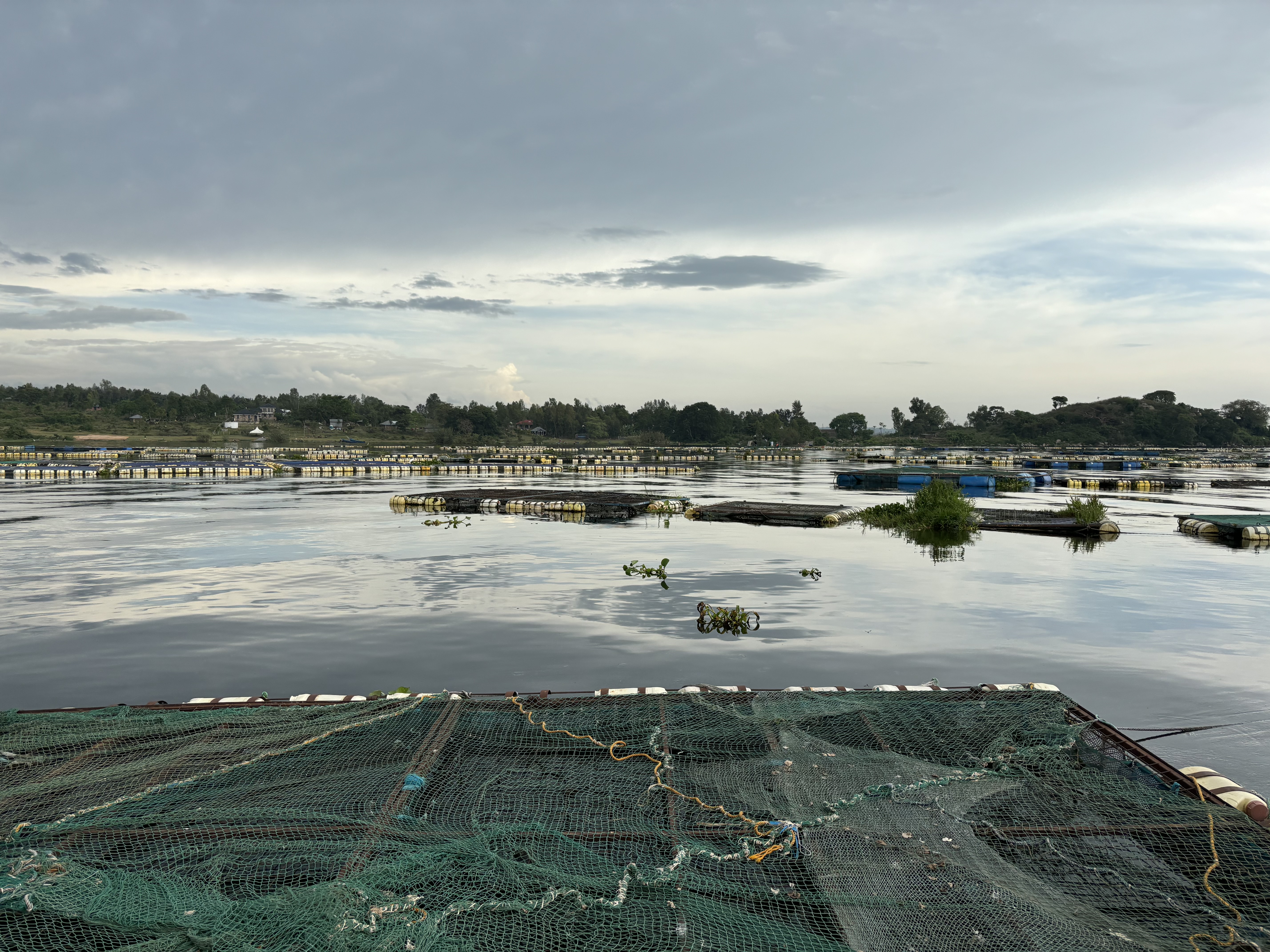
By determining the nutrient-density and food safety risks linked to Kenyan aquaculture, policymakers and other stakeholders can guide the expansion of aquaculture to optimize health outcomes; this can be achieved through incentives targeted to specific production systems, such as cage vs. pond aquaculture or those utilizing nutrient-rich feeds.
Partners:

Example Projects:
Ziegler, CS, Roegner, AF, Aura, CM, Fiorella, KJ. 2022. Social Constructions of Health-Environment Risks: A Comparison of Fishing Community and Expert Perceptions of Cyanobacterial Blooms. Society & Natural Resources. 1-22.
Funding:
This work is supported by a NSF CNH2 (NSF BCS# 2009658).
 Fiorella Research Group